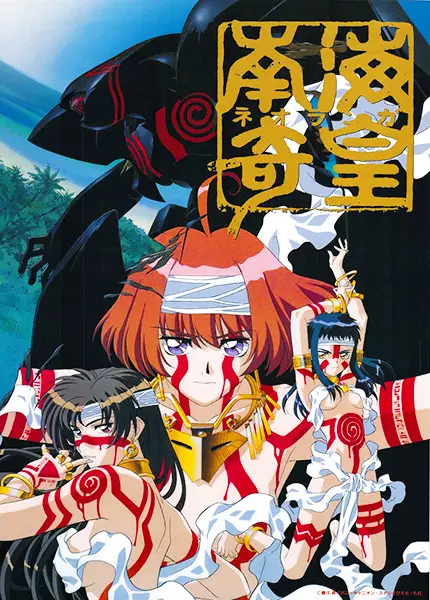
Neo Ranga
南海奇皇ネオランガ
Studio: Studio Pierrot
Synopsis
An ancient God called Ranga awakens on an isolated island in the South Pacific where it has been slumbering forgotten by mankind. Three sisters living in Tokyo—Minami, Ushio, and Yuuhi Shimabara—discover they have inherited this Island Kingdom, along with the huge God. When Ranga shows up in Tokyo, it soon becomes a source of wonder and conflict for the three sisters that control Ranga, the people who want to destroy it, and ones who want to use it. (Source: ANN)
Recommendations


Characters & Voice Actors

Joel
Main
VA: Miyata, Kouki

Neo Ranga
Main

Shimabara, Minami
Main
VA: Musy, Stella

Shimabara, Ushio
Main
VA: Miyamura, Yuuko

Shimabara, Yuuhi
Main
VA: Vincent-Davis, Kira
Akiyama, Yasuharu
Supporting
VA: Vance, Mike
Amagi, Erina
Supporting
VA: Miura, Naoko
Andou, Junichi
Supporting
VA: Swasey, John
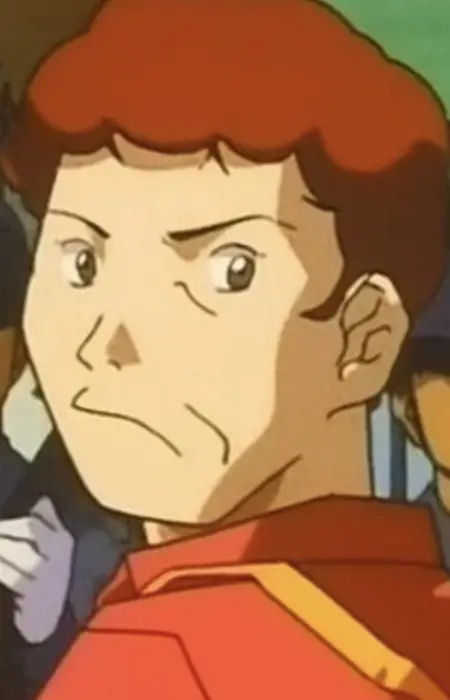
Andou, Haruhiro
Supporting
VA: Rae, Marcy
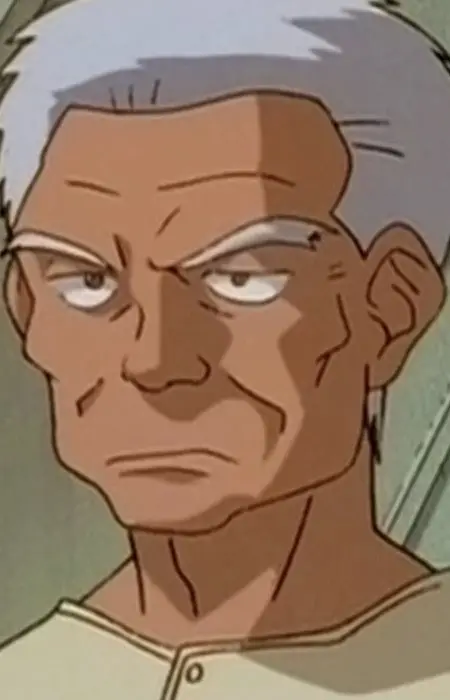
Asoaka
Supporting
VA: Gremillion, John
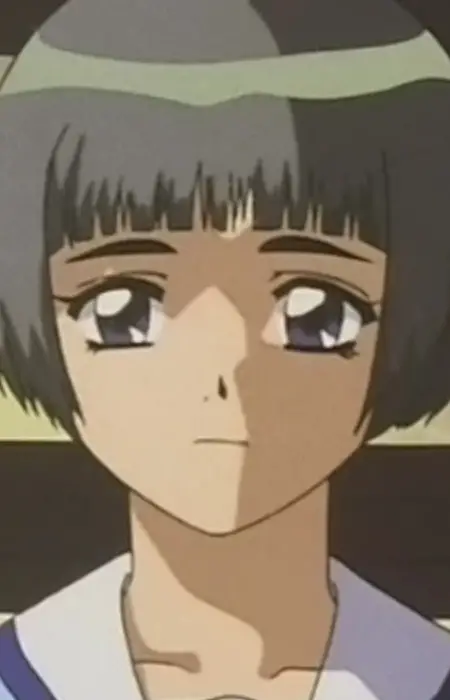
Chikamatsu, Tomoko
Supporting
VA: Grant, Tiffany
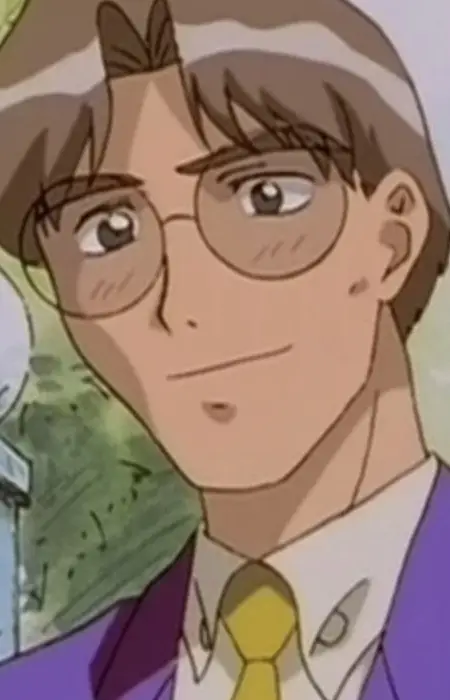
Fujiwara, Kazuo
Supporting
VA: Miyamoto, Mitsuru
Joel
Main
VA: Miyata, Kouki
Neo Ranga
Main
Shimabara, Minami
Main
VA: Musy, Stella
Shimabara, Ushio
Main
VA: Miyamura, Yuuko
Shimabara, Yuuhi
Main
VA: Vincent-Davis, Kira
Akiyama, Yasuharu
Supporting
VA: Vance, Mike
Amagi, Erina
Supporting
VA: Miura, Naoko
Andou, Junichi
Supporting
VA: Swasey, John
Andou, Haruhiro
Supporting
VA: Rae, Marcy
Asoaka
Supporting
VA: Gremillion, John
Chikamatsu, Tomoko
Supporting
VA: Grant, Tiffany
Fujiwara, Kazuo
Supporting
VA: Miyamoto, Mitsuru
Reviews
 The_Golden_Witch★ 9
Neo Ranga is one of those ‘great shows that no one’s heard of’, only this time it’s underrated as well as overlooked. According to MAL, only one of my friends has seen the show (and he's seen everything) and only a small number of total members as well. What’s more, the collective score is only 6.63, and the results are similar on ANN. Why? How could a show so great get so overlooked? Actually, I’m pretty sure I know. Neo Ranga is, without a doubt, one of the outright strangest anime I’ve seen. Which is funny, because at the same time, it’s not very far offfrom other anime of it’s length – the plot progression, general themes, and especially the ending are all pretty familiar to anime fans, but the presentation is totally unique. Neo Ranga is composed of 48 half-length episodes (effectively a 24-ep series) which are paced like a raging fucking tornado. The best way to describe the sheer speed and deftness of events in Neo Ranga is ‘brutal’, and this is the series’ greatest strength, right up until the end. What’s more, the series is utterly unexpected in the way it handles it’s themes and wordview, which is to say, it takes them really seriously. …Or does it? Neo Ranga’s pace takes some real getting used to. The series begins with Neo Ranga itself, an enormous kaiju, stomping through Tokyo, with exactly the kind of reactions and presentation you’d expect from a Godzilla movie. As it turns out, Neo Ranga is a god, and three parentless Japanese girls are the ‘owners’ of this god, thanks to the fact that their older brother, who left home 10 years ago, became the king of a souteat Asian autonomous kingdom called Barou which had worshiped the god to this point. And then we get a whole smorgasbord of themes presented in the most flawless method imaginable. Neo Ranga covers everything. Military politics, religious politics, psychology, ambitions, morals, the minds and actions of each of it’s characters, social issues, world issues – everything. It starts off with a huge maelstrom of emotions and actions as the whole world has to deal with the sudden appearance of a god and, more importantly, three young women have to deal with being it’s masters. However, it’s not like this show is stiff and serious – on the contrary. The show’s drama is met with an equal force of comedy, tongue-in-cheek, and lightheartedness, but because of the ingenious presentation, it never lessens the blow of the drama. Actually, it enhances it, because it humanizes it. The drama of politics can sometimes seem like a silly and overblown game, but it’s effects are still very real, and something that can seem comically-timed one moment can turn out to have gruesome consequences the next. And this show never, ever ignores the consequences of it’s actions. This is, however, what makes the show hard to get into at first, because it demands you be attentive and not take anything at face value. This is the point where I feel I should tell you that it’s taken me around 2 and a half years to finish Neo Ranga. The first time I tried watching it, I got through 7 episodes before the stream I was watching fucked up, and I was unable to continue. The second time, I downloaded the series, and I watched 18 episodes of it before I stopped, and while I had never stopped liking the series a lot, I didn’t feel a huge urge to continue. My reason was that I was finding the series terribly confusing. I mistook the constant changing between what felt like serious scenes and comedic scenes to be the series’ simple quirkiness and didn’t look for anything deep in it, so I just took it as one of those series that is memorable for the same reasons it is flawed, sort of like Futakoi Alternative (no to knock that great show, but it’s pacing is an issue just as it is an asset.) However, now that I’ve finally watched all of Neo Ranga on the box set I bought some time ago, I can safely say that I was wrong about my initial impression. Neo Ranga requires attention. It is so fast, so merciless, and demands such an extent of ability from the viewer to understand what is going on, that it requires real concentration. Unfortunately, though, this incredible strength is also what magnifies the series’ biggest weakness. As I made my way through Neo Ranga, I began to wonder why it was that this show never got to be remembered as a ‘classic.’ I knew it wouldn’t have had a chance to be an Eva-level classic, even though I think it was easily presented as well as Evangelion, but I would have thought it could at least have reached Martian Successor Nadesico-level cult status. And then I got to the ending. Neo Ranga has one of the most disappointing endings I’ve ever seen in anime. In truth, there was a point during the last 8 episodes wherein I thought ‘if it ends right here, it can still be totally satisfying’, but Neo Ranga does a stupefying move in using the last four episodes to rush through a truckload of new twists and plot points that drained all of my interest and eventually had me begging for it to hurry up and end before it got any worse. The last episode doesn’t even have time to provide a resolution to the series, leaving a horrible taste in my mouth. However, this should not have been enough to defeat the series. Even Martian Successor Nadesico had a pretty disappointing ending (albeit still better than Neo Ranga’s) and there are series like the infamous Escaflowne who fucked their pacing throughout the entire second half of the series and swan-dove into an unbelievably terrible ending, but still got remembered as a classic. There is definitely a lot more to like about Neo Ranga than there was about Escaflowne, and that’s saying a lot.It’s possible that the series never got big in America simply because it aired between 1998 and 1998, and from what I’ve heard, there is a sort of vacuum from 98 to 02 that for some reason, many of the shows that came out in that period in Japan went totally unknown here. someone help me if that’s true of this show. As per my usual methods of dissecting what I love about a show, I’ll start with the presentation itself. Neo Ranga is the kind of show that could only be some creator’s darling lovechild, and the viewer will certainly notice original creator and writer Sho Aikawa’s (no, not that Sho Aikawa) name all over the place. Indeed, Neo Ranga is spectacularly directed, animated, and storyboarded, but I think the writing is the true force of greatness in this show. The script and the way that events are sequenced have an airtight, brilliant cinematic quality, as if the show was more intent on being a live-action movie or series all along (a fact that seems even more pertinent when you consider the segments in next episode previews wherein characters sometimes talked about how they ‘filmed’ certain scenes.) A lot of the early episodes heavily involve yakuza, which is why I guess it’s no surprise that they are directed like Battles Without Honor or Humanity. This is definitely a show that I think cinemaphiles can get into. Actually, one movie that I think makes a great comparison to at least the early episodes of Neo Ranga is my favorite movie, The Dark Knight. They are similar in that they are directed like gangster films and deal with all sorts of socio-political issues, from an angle wherein completely overblown entities exist and ideals are blasted around with full force and wide-open hearts. I think what I really wanted from Neo Ranga was for it to last much, much longer. I loved the way that it studied socio-politics from right in the thick of it, and how it ran these issues through the minds of it’s characters, developing them with each new occurrence. The reason that the ending was so disappointing wasn’t just because it came so suddenly and ham-handedly, but because there was so much left for this series to cover. The characters had made progress, but there was still so much more they needed to learn, and do, and become. There were a ton of potential relationships in this show that were left totally open-ended. Every character had something that they were missing, that they were trying to find, and in the end, we not only didn’t get to see anyone to the end of their path, but we didn’t even get a solid view of where they’d be going. Did Aikawa know this? Did he intend for his series to be much longer, but couldn’t afford it? Neo Ranga was apparently split into two separate seasons, divided at the 24 episode mark. I want to say that while the entire series was great, the first half had just a bit of an edge over it the second. There were fewer of those moments of sheer brilliance in the second half, even if it continued to be great until it’s sudden, rushed, and botched ending. Was Aikawa disappointed? Did he half-heartedly try to get as many of his points across as he could before having to end his series? Did he purposefully cram the ending into the last few episodes because he wanted more time to flesh out the things that mattered in the series? I can’t ask him, and with the amount of recognition that Neo Ranga has after 12 years since it finished airing, I doubt anyone cares enough to fight for an answer. That’s what makes Neo Ranga the epitome of a ‘cult classic’. It never got the chance to be a fully-realized epic, so all we have left is to take the great things that it gave and try to use our own imagination to see what it could have been.
 HazelHawks★ 9
A bit of a rabbit hole this... Simply put, Neo Ranga is one of my favorite anime series and, though far from flawless, it gets my vote for most underrated series on this site. Functioning somewhere between modern-day fable and social satire, Neo Ranga tells the story of the Shimabara sisters who live on a hill in a suburb of Tokyo, and of Ranga, a massive godlike creature (physically - part Godzilla, part giant robot) who comes from the sea to serve them. However, far from a simple girl-meets-sentient-mecha anime, Neo Ranga takes a wide-angle view of the storyand is as much about Tokyo and its citizens as it is about the sisters. We are introduced to local merchants, crooked politicians, ambitious tv producers, opportunistic yakuza, a military excited to try out new weapons on Ranga, disanchanted youth, secret societies, etc, all of whom must come to grips with this seemingly omnicient power. Perhaps it's worth noting that this was a late '90s production with the fear of Y2K still looming large on the horizon. Neo Ranga is very episodic in nature & often feels disjointed in its presentation due to its short episode length. This is very much a slice-of-life series (with very little that could be construed as horror, at least in the traditional sense), as the 3 sisters struggle through their daily existance even as a giant god sits in their backyard & half of Tokyo bears down on them for one reason or another. The sisters themselves are fairly archetypal (I'm sure a Freudian analysis would be valid here) as Ushio is generally idealistic, Yuuhi destructive, and Minami, the older, more pragmatic caregiver. That said, I didn't think the personalities were too overbearing or static - they came across as genuine characters, true to their ages rather than as allegorical puppets. The other characters in the series were reasonably well-developed, - they felt genuine in their purpose and didn't seem to exist simply to push the plot in a contrivial manner. A couple of the more antagonistic characters in the 2nd half of the series failed to live up to this description, but otherwise, I had no qualms. Through the 1st 40 episodes (41-48 comes later), the animation, art, and character design was remarkable. The style feels very much a product of its time. It lacks the smooth crisp lines of most Gonzo or Bones productions of today, instead relying on a gritty, realistic feel with occasional artistic flourishes - this anime has my favorite Tokyo-look ever. The girls themselves have typically massive eyes and sharp foxlike features - the rest of the characters vary from foxlike to potatolike depending on whether they are meant to be attractive. The god/mecha design also was excellent, though often very strange (which is what I like I guess) and at times, rather silly. Sound production was great - the voice actors were well-cast and there wasn't anything in the anime itself that proved detrimental. The songs are certainly a bizarre set - the opening tracks rely on groovy "tribal" rhythms and chanting. Season 1's op theme is one of my favorite anime songs ever, a bit of a throwback to '60s and '70s b-movie exploitation themes. The 2nd season's op theme has more of a Ennio Morricone feel to it but doesn't work as well, mainly due to (purposely?) poor use of synthetic voice sampling. The endsongs left less impression, though I remember trying to avoid listening to the 2nd season endsong as much as possible (reminded me of Escaflowne's endsong). The next paragraph mentions the last few episodes of the anime - not the story so much as the form and quality. I don't really consider that a spoiler but if you do - might wanna skip it. Regarding episodes 41-48: I've seen a few ambitious anime series that simply don't quite know what to do with themselves down the stretch, usually a quality-drop is in order. However, I have never seen such a transformation in tone, pacing, and animation style as occurs with Neo Ranga in it's final episodes. Episodes 41-42 and part of 43 look as though they were produced by a completely different company altogether (production i.g. is my guess). Most of the humor is jettisoned and the story rockets forward into the bizarre and outlandish...perhaps incoherent. But what's really odd, is that it's not badly done. I enjoyed the end as much as the rest, I just felt I was watching a different show. Overall, Neo Ranga is one of the most idiosyncratically enjoyable anime series I've seen, and at the end I felt it was as fully realized a world as I've come across in an anime series, with likeable characters who's actions & reactions, while in the shadow of the massive Ranga, made sense (until episode 41). Though perhaps hard to recommend - maybe too slow and goofy for most mecha fans and too dark and strange for fans of domestic comedy, but, if you're looking for something a bit different, curious, thoughtful, and self-aware, you might want to give Neo Ranga a shot.