
Neighborhood Stories
ご近所物語
Studio: Toei Animation
Synopsis
Mikako Kouda is a 16-year-old girl whose sole ambition is to establish her own clothing brand. To this end, she attends the renowned Yazawa Art School alongside her childhood friend Tsutomu Yamaguchi. Although the people around them interpret their closeness and constant bickering as signs of budding love, both Mikako and Tsutomu deny it, as they cannot see each other as anything but friends. However, everything changes when Tsutomu starts to resemble Ken Nakagawa—the vocalist of the popular group Manbou—and gains popularity among girls. Suddenly, the childhood friends find themselves wondering about the meaning of love, friendship, and the true nature of their relationship. [Written by MAL Rewrite]
Recommendations


Characters & Voice Actors

Kouda, Mikako
Main
VA: Shishido, Rumi

Yamaguchi, Tsutomu
Main
VA: Yamaguchi, Kappei

Kanzaki, Risa
Supporting
VA: Niiyama, Shiho

Kouda, Ruriko
Supporting
VA: Kawanami, Yoko

Mrs. Hamada
Supporting
VA: Hagimori, Junko

Nakasu, Shintaro
Supporting
VA: Yonemoto, Chizu

Nakasu, Mariko
Supporting
VA: Touma, Yumi

Nishino, Jiro
Supporting
VA: Tsukui, Kyousei

Oikawa, Ayumi
Supporting
VA: Minaguchi, Yuko

Oota, Mai
Supporting
VA: Yamazaki, Wakana

Saejima, Midori
Supporting
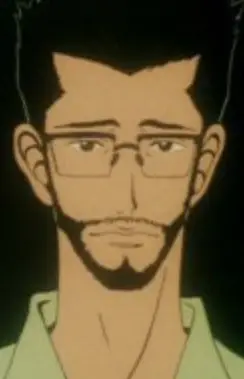
Sakurada, Hirohiko
Supporting
VA: Yara, Yuusaku
Kouda, Mikako
Main
VA: Shishido, Rumi
Yamaguchi, Tsutomu
Main
VA: Yamaguchi, Kappei
Kanzaki, Risa
Supporting
VA: Niiyama, Shiho
Kouda, Ruriko
Supporting
VA: Kawanami, Yoko
Mrs. Hamada
Supporting
VA: Hagimori, Junko
Nakasu, Shintaro
Supporting
VA: Yonemoto, Chizu
Nakasu, Mariko
Supporting
VA: Touma, Yumi
Nishino, Jiro
Supporting
VA: Tsukui, Kyousei
Oikawa, Ayumi
Supporting
VA: Minaguchi, Yuko
Oota, Mai
Supporting
VA: Yamazaki, Wakana
Saejima, Midori
Supporting
Sakurada, Hirohiko
Supporting
VA: Yara, Yuusaku
Related Anime
Reviews
 Kokujin-kun★ 7
I might as well write a review of this anime since I was the one who provided (most of) the raws, translated it and reviewed each episode at least three times before it was released, which in my opinion counts for at least something. Well, as much as I am loathed to put labels on what are clearly three-dimensional characters, here we have a show where Ai Yazawa pretty much presented us with what could be a psychological profile of a tsundere before such a term even came to existence. She's brassy, full of herself and can sometimes be unfairly cruel, but that isjust a front she she feels she has to put up in order to shield her vulnerable side. Yes, it would be convenient to say Mikako is the way she is because of the childhood trauma of a divorce (and what her Mom did afterwards). But alas, the reason behind her disagreeable personality is artistically anticlimatic. That is simply the way she is, as is evident from the flashbacks from her childhood and later when she becomes "honest with herself." This is the place where I feel the anime succeeds because we become too used to seeing the lead female character who is cutesy, klutsy, timid, moe or whatever stereotype that is supposed to appeal to the regular anime audience. She is truly one of the more variated full-rounded characters you'd find in any narrative. The main drawback from this show, like a lot of the shoujo anime that aired around that time (Marmalade Boy, Kodocha) is the number of episodes. I really believe they could have more effectively told the story that they presented if they instead aired around half the episodes. Of course I am talking about filler episodes that sometimes introduced inconsistencies (***spoiler****e.g. why would Mikako be unable to sell her wrong-sized clothes at the second flea market if she was able to sell out all those exact same clothes at the first flea market?***spoiler***), but that is a minor quibble compared to the parade of episodes that occupied the middle featuring a love triangle between three supporting characters. They could have easily settled that matter in a handful of episodes, but they stretched it out over at least ten episodes, padding those with situations based on uselessly masochistic self-abnegations so contrived that my suspension of disbelief almost never recovered. But thankfully, it didn't overtake the main story of the show, which was the real draw in the first place. It's clear the creator had a lot of fun with her inaugural anime adaptation and it shows through her somewhat unconventional artwork and character designs. The whole thing sort of reminds me of "Doug". The animation certainly shows its age, although it's pretty solid for what was shown at the time. For those who are expecting the quality put into Yazawa's other two animes by Madhouse Studio, be warned that you've been spoiled. The music, mostly provided by Mikako's seiyuu Rumi Shishido might be an acquired taste for some (for those who don't like unsteady singing voices), but it grows on you, at least it did for me. The story, as long as it focuses on the two main characters, is pretty solid-grade work as it navigates you through the ups and downs of a teenage girl trying to cope with her contrary personality. As for enjoyment - well I wouldn't have spent at least 62 total hours going over the series if I didn't enjoy it. So in the end it would have received a higher grade for the story and characterization if it weren't for the mostly repetitive fillers.
 haydenluvsanime★ 9
Ai Yazawa, known mostly for Paradise Kiss and Nana, has been a prolific figure in the world of shoujo manga for decades with her mature themes and more realistic approach to character development. Gokinjo Monogatari was my introduction to her. What initially drew me to watch this show was the very unique art style. Everything is done completely with flat colors which made me think of '70s cartoons. It's definitely a peculiar look, but fits the show to a tea. There's a perfect balance between being tastefully retro and progressively modern. Thankfully nothing is really lost with having such beautiful artwork either. It's similar to SailorMoon in the sense that the art style at its core is so strong and appealing that the limited animation isn't as much noticeable, though, that's not to say that it doesn't also look great in motion, because it does. But art only nets you so many points in your favor. I could also mention the music which is absolutely phenomenal and so good that it can almost be a little distracting at times. Take that as you will, I see it as a positive. But the characters is where Ai Yazawa shines and Gokinjo Monogatari certainly doesn't skimp out on that. Despite being one of her earlier manga, it works because it all feels very personal. Every character in Gokinjo Monogatari is lovable and easy to empathize with. Even if there were a character you didn't particularly like or connect with at first, I guarantee you'll grow to love them during one of their episodes. Yes, while there definitely is an on-going narrative, for the most part it's pretty casual. There definitely is plenty of drama and romance, but it weaves in and out of relevance rather than being the main focus. And in between that you have a string of really wholesome episodes that'll tug at your heartstrings. These were some of my favorite episodes and really showcases the show's wide emotional palette. With that being said, comedy is one thing Gokinjo Monogatari does not prioritize. Most of it comes from cheeky banter between the characters. It's more charming than anything, but you won't exactly be laughing out loud. Honestly I kind of like that though. Makes everything feel a lot more genuine. Every scenario feels like it could've been directly inspired from the creators' lives. It creates this very intimate bond between the show and the viewer. Gokinjo Monogatari is something you watch to invest yourself into these characters' lives. To see this group of friends figuring themselves out through the hard times, but ultimately sticking together out of mutual love for each other. While some moments hit very close to home and and made me feel the same guilt and anxiety as the characters, at the end of the day it encourages self-improvement and shows you that there are people out there for you. Is it anything life-changing? Maybe, maybe not. It's honestly more reaffirming than anything. Makes me feel more confident in myself. And I think that's something everybody could appreciate. Regardless of what you get out of this show, it absolutely will stick with you one way or another.