
Dororo
どろろと百鬼丸
Studio: Mushi Production
Synopsis
To aid his conquest of Japan, the ruthless lord Daigo Kagemitsu offers to sacrifice his soon-to-be-born son to 48 demons. The demons accept, and the next day, the child is born with several missing limbs and is ruthlessly cast down a river. Fifteen years later, a stubborn young boy named Dororo struggles to survive against hunger and oppressive samurai on the streets of an impoverished and war-torn village. After angering a group of thugs, Dororo is attacked by them, but a mysterious man interrupts them, claiming to hear spirits nearby. Sure enough, a monster emerges from the river, and the man then removes his prosthetic arms, revealing blades hidden underneath, with which he slays the monster before leaving. That night, as the man walks through the forest, Dororo approaches him and declares that he will accompany him. From this, the man, Hyakkimaru, reveals that many of his body parts were stolen by demons and that though he sought a peaceful life, he couldn't escape their relentless onslaught. Despite the tale, Dororo still insists on tagging along. And thus, Hyakkimaru travels through Japan with his new companion and a puppy named Nota, facing the brutality of both hell and mankind. [Written by MAL Rewrite]
Recommendations


Characters & Voice Actors

Dororo
Main
VA: Matsushima, Minori

Hyakkimaru
Main
VA: Nozawa, Nachi

Bandai
Supporting
VA: Kitahama, Haruko

Biwamaru
Supporting
VA: Takiguchi, Junpei
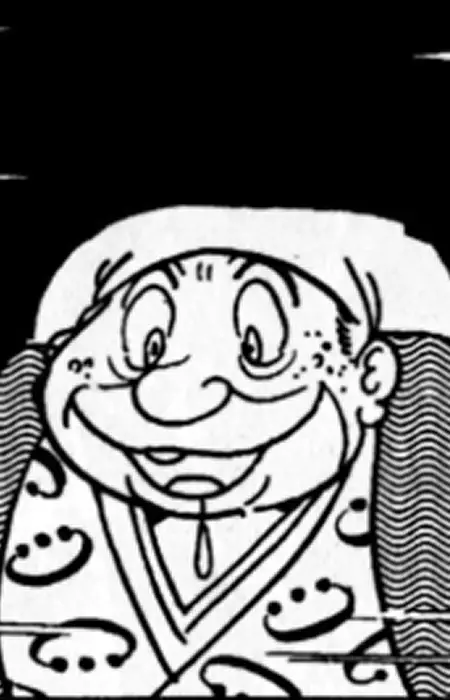
Donburi Magnate
Supporting
VA: Mine, Eken

Jukai
Supporting

Kagemitsu, Daigo
Supporting
VA: Naya, Gorou

Kanekozou
Supporting
VA: Tamura, Kinto

Midoro
Supporting

Mio
Supporting
VA: Mutou, Reiko

Nuinokata
Supporting
VA: Kitahama, Haruko

Sukeroku
Supporting
VA: Miwa, Katsue
Dororo
Main
VA: Matsushima, Minori
Hyakkimaru
Main
VA: Nozawa, Nachi
Bandai
Supporting
VA: Kitahama, Haruko
Biwamaru
Supporting
VA: Takiguchi, Junpei
Donburi Magnate
Supporting
VA: Mine, Eken
Jukai
Supporting
Kagemitsu, Daigo
Supporting
VA: Naya, Gorou
Kanekozou
Supporting
VA: Tamura, Kinto
Midoro
Supporting
Mio
Supporting
VA: Mutou, Reiko
Nuinokata
Supporting
VA: Kitahama, Haruko
Sukeroku
Supporting
VA: Miwa, Katsue
Related Anime
Adaptation
Alternative Version
Reviews
 Czarine★ 7
I must warn you at this point: even if this is a children's anime, it is very gory, and has cruel themes going on (starvation, child slaughter, war...). But no sex nor rape, obviously. Many of the monster scenes would be considered way too scary for children today. As of writing this, only half of the episodes have been subbed. I understand some japanese, so the lack of subtitles wasn't a problem, since the story is quite straightforward. Knowledge of old fashioned and slangy japanese is useful, if you wish to keep up with the characters' lines. Story: I haven't read the manga, so I didn't have anyexpectations when I started to watch this. The story took me by surprise! It was enjoyable and reminded me of some old japanese folk stories. I would compare the feeling to watching Mushishi, except that Dororo has lots of action going on and less monster lore thrown around. The first half of the series has a gripping storyline, with a lot of character development. The episodes' storylines could span 2-3 episodes. After that the series gets a bit loose, and I can't help but feel the episodes have a filler feeling to them. They also change to the one-episode-per-storyline format, which didn't do good for the pacing. The last episode ties things up hastily but is okay. The ending development could have started a bit sooner, so the pacing would've worked better. Art: I'm actually pleased that this anime stayed black and white. The colored pilot doesn't have the same eerie feeling. I also like it that they made Hyakkimaru look older than in the pilot. The animation is okay, though there are some wonky parts here and there. As an animator, I can forgive them. Sound: I really liked the music in this series (though the opening theme is too catchy :D). If you like biwa, you'll like it too. The music reminded me of Ninja Scroll, which is my favorite. The sound design is old fashioned, and I recognized some nostalgic sound effects that were a norm even in the 80's. Sometimes the growling sounds were more funny than threatening, and I would've liked more variety in female voices. Characters: The first half of the show is a bit more focused on Hyakkimaru, and the last half on Dororo. It's not too black and white, but I would've liked the story to be more evenly divided between the two. I liked how Nota (the dog) also had important moments in the plot, and wasn't there only to look cute. The series has a wide cast of secondary characters, of which some are more memorable than others. But I liked it how they were easily distinguishable from each other; a trait that isn't that well handled in more recent anime. Enjoyment: As mentioned before, the plot was great in the first half, but lost it grip in the second half. I did watch the whole series during a few days, so I guess it was gripping enough. Overall: If you like wandering samurais, yokai and old school kids' anime, this is for you. This is like a children's version of Ninja Scroll and Mushishi put together. I'd say you could watch the first 13 episodes and skip the rest to the final one, without missing anything important in between.
 ggultra2764★ 6
I'm mainly familiar with Osamu Tezuka's dark fantasy/ historical manga series from my exposure to the 2019 remake of the series that would come out for it 50 years later, which I did have the opportunity to see last year. This older adaptation appears to simplify a good deal of the supernatural lore and character depth found from the remake with Hyakkimaru appearing to have psychic abilities for sensing his surroundings and communicating with others, Dororo being more hot-headed and bratty, and Daigo Kagemitsu portrayed as a pure villain. Plus, the number of demons that Hyakkimaru has to slay to reclaim his body parts is48 instead of 12 from the remake. It looked like reducing the demon count for the remake was to allow the series to focus more on developing its story and characters instead of Hyakkimaru's slaying of demons he encounters on his journey. Granted, simpler storytelling was the norm with TV anime of the 1960s. But said simplicity does have its ups and downs throughout Dororo's run. Far as pros go, the 1969 Dororo anime actually does a pretty solid job of story building for its first half and dabbling into horror with its presentation. The story developments within Dororo for its first half are divided up into 2 to 3 episode arcs. Some story arcs dabble into Dororo and Hyakkimaru attempting to investigate and slay a demon within any village they travel to, while others serve to explore backstory with the pasts of our two lead characters. It looked like the series was planning to gradually develop our two lead characters throughout their journey, notably when Hyakkimaru does eventually come to confront members of his biological family in the later part of the anime's first half. Far as the horror goes, the anime's black and white presentation helps enhance the visuals with depicting how monstrous the demons confronted by Hyakkimaru are and setting up story arcs across 2 to 3 episodes helps create slow enough pacing to create genuine suspense out of the confrontations that Hyakkimaru and others have with enemy threats. I understand the anime was originally meant to be in color, but made black and white due to budgetary constraints. As commented, this aesthetic decision actually helps benefit the anime's element of horror. Adding to this, the anime is surprisingly violent for its time period with plenty of spilled blood and dismemberment found throughout its run. I didn't mind the violent content in question as I felt it necessary to reflect the brutal nature of Japan's feudal era with the corruption of the samurai class and the demons that exploited the suffering of humans they haunted. But I was under the impression that there weren't TV anime with that level of violence during that era since they were largely aimed for younger audiences. Setting aside praises, the 1969 Dororo anime has a good number of issues. The second half of the anime deviates from the plot structure of its first half by largely focusing on episodic plots exploring Hyakkimaru's slaying of demons. This leads to the series taking a big hit with its focus on further exploring its plot and characters, as well as greatly reducing the suspense of Hyakkimaru's encounters with demons confronted since the demon-focused plots have quicker pacing and are resolved within the span of a single episode. Apparently due to Osamu Tezuka abruptly ending the Dororo manga series, many episodes for the TV anime's second half were exclusive for the anime and this shows with the hit in quality for the show's storytelling within its second half. Not helping matters is the final episode being rather compressed and lacking proper buildup with showing Hyakkimaru's final confrontation with his evil birth father and the very sloppy handling of Dororo's gender reveal. The simplicity of the storytelling does also work against my reception to Hyakkimaru's character. The so-called psychic powers that he has for interacting with others and following his surroundings in spite of lacking much of his body parts and functions reeks of lazy convenience written into the series and this element of his character is actually never mentioned or explored until a later episode has him make a passing mention of this after regaining the ability to talk. Matter of fact, the anime has some noticeable inconsistencies with Hyakkimaru regaining specific body parts or functions in spite of still shown using his body prosthetics all the way up to the final episodes of the series. The 2019 remake does a much better job of portraying the difficulties that Hyakkimaru has with moving around and interacting with others outside of demon slaying until he gradually regains more of his body parts and functions. While I'll admit Dororo is a unique beast for its time with its elements of horror and solid first half, it gets quite sloppy in its second half with changing up its plot structure and rushing with its finale, as well as offering enough issues with Hyakkimaru's character in believably portraying his disabilities. While I'd at least recommend seeing the 1969 Dororo anime once due to its historical value, I still find the 2019 remake to be the definitive version of Dororo to check out due to its stronger plot building and character development.